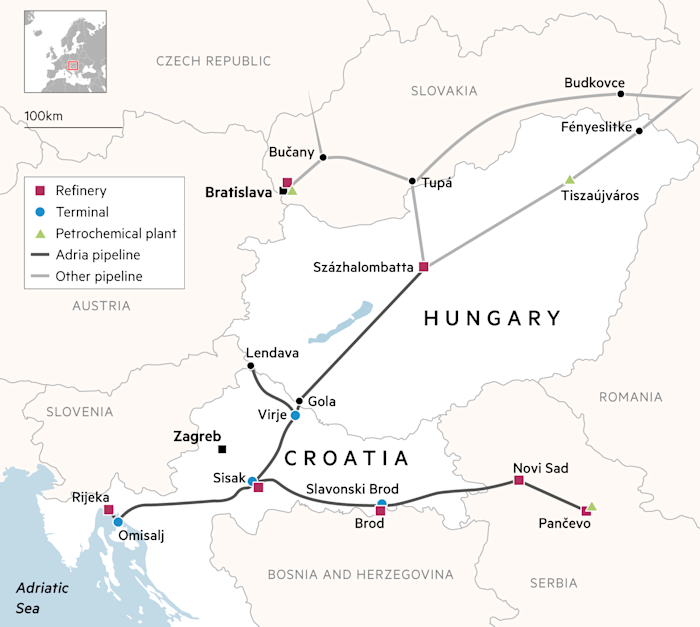
This is how our govt. communicates about the problem at hand: Hungary and Northern Hungary don't get their crude oil since January 27th though the Friendship pipeline. Ukraine turned off the tap citing a Russian attack, but both Hungary's officials claim there is no technical obstacle preventing opening it again. Both countries turned to the EU Commission for help, and stopped the diesel export (note: Orbán in his speech mentioned petrol/gasoline not diesel) towards Ukraine, and the Hungarian govt. blocks the €90 billion loan the EU plans to take to give it to Ukraine, Northern Hungary floated the idea of stopping electricity export too. The under-secretary framed like his: We have a country that wishes to enter an alliance but stops the energy supplies of one of the members of said alliance, taking a step what customary for belligerent parties. Meanwhile the center of the alliance puts the interest of the outsider before the member's. He said what Brussels couldn't manage to do - stopping Russian gas, oil, and nuclear energy - now they did it with a plan B via the Ukrainians. He ties it together with the election: Brussels weakening the energy security of Hungary, resulting in a weaker government, lessening the chance of the governing party (Fidesz) to win the election. Energy crisis however was diverted, due to security oil reserves. Problems with Croatia: If we can't get the crude oil via the Friendship we could only get it from Croatia via the Adria/Janaf pipeline. The maximum amount we ever got via that was 2 million tons of crude per year, the Friendship transports 5 million - Croatia says they can do that many. Croats demand premium for the transport. The Croat PM said they'll keep sanctions, their minister of economy said they won't allow Russian oil through. There will be a conciliatory session on Wednesday, the two Hungaries will sit down with Croatia and see what is their actual standpoint - not just media statements.
 02/23/2026 (Mon) 19:37
No.55093
del
02/23/2026 (Mon) 19:37
No.55093
del