Stephen did bestow beneficium from his lands to lot of people and entities. Church got lands, western emigre knights got lands, loyal Hungarian subjects got lands. He usually used the lands he confiscated from his defeated rivals and rebels, or that were empty/unused previously. These lands went with the usual feudal ties and obligations - service to the king. But this wasn't his organization work, this was just creating a group of people loyal to him only, where he could draw his officials from.
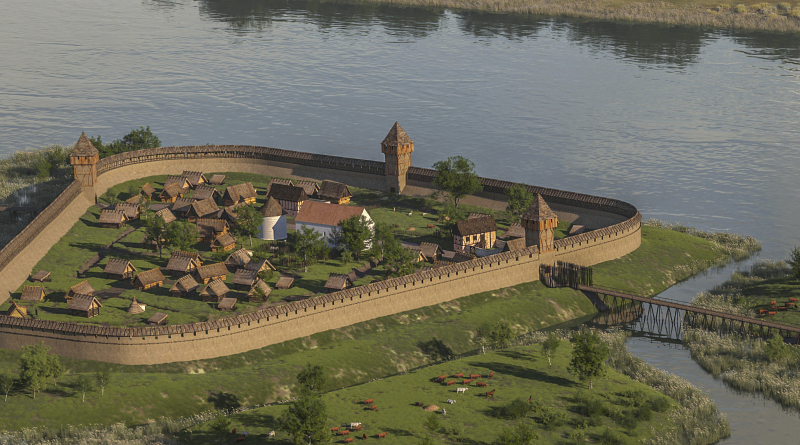
Just like at the Franks, the center of the royal economy was the palace. For the role of the "director" of the economy, influenced by the Franks, Stephen created the office of the comes palatii (later palatinus comes), in Hungarian he was called the nádorispán from the Slav nadvor zhupan. He held together and coordinated the work of all the comes or the ispán/várispán. These stood at the helm of the counties - Latin: comitatus, Hungarian: megye/vármegye or ispánság/várispánság - which were more or less connected lands of bodies with a castle in the administrative center of each. These castles were the seats of the comes-es what would be the plural form in English? where they directed the work of the servients and collected the taxes. Where there wasn't any suitable castle, they built one. It complicates things but worth to note (for Hungarian readers if their bad luck directs them here) that currently some historians think that the (vár)ispánság was a smaller category, the castle and the royal lands, and (vár)megye included Church and private holdings too.
 08/20/2026 (Thu) 16:00
No.55555
del
08/20/2026 (Thu) 16:00
No.55555
del