Transforming Transactional Ties U.S., Russia, China
The complex dynamic among the United States, Russia, and China has fundamentally shifted away from traditional, ideology-driven alliances toward a highly pragmatic framework of managed competition and transactional ties. Rather than working to completely reshape the existing international system or seeking permanent detente, Washington, Moscow, and Beijing are increasingly utilizing direct, case-by-case bargaining to manage systemic risks and hedge against economic or military overextension.
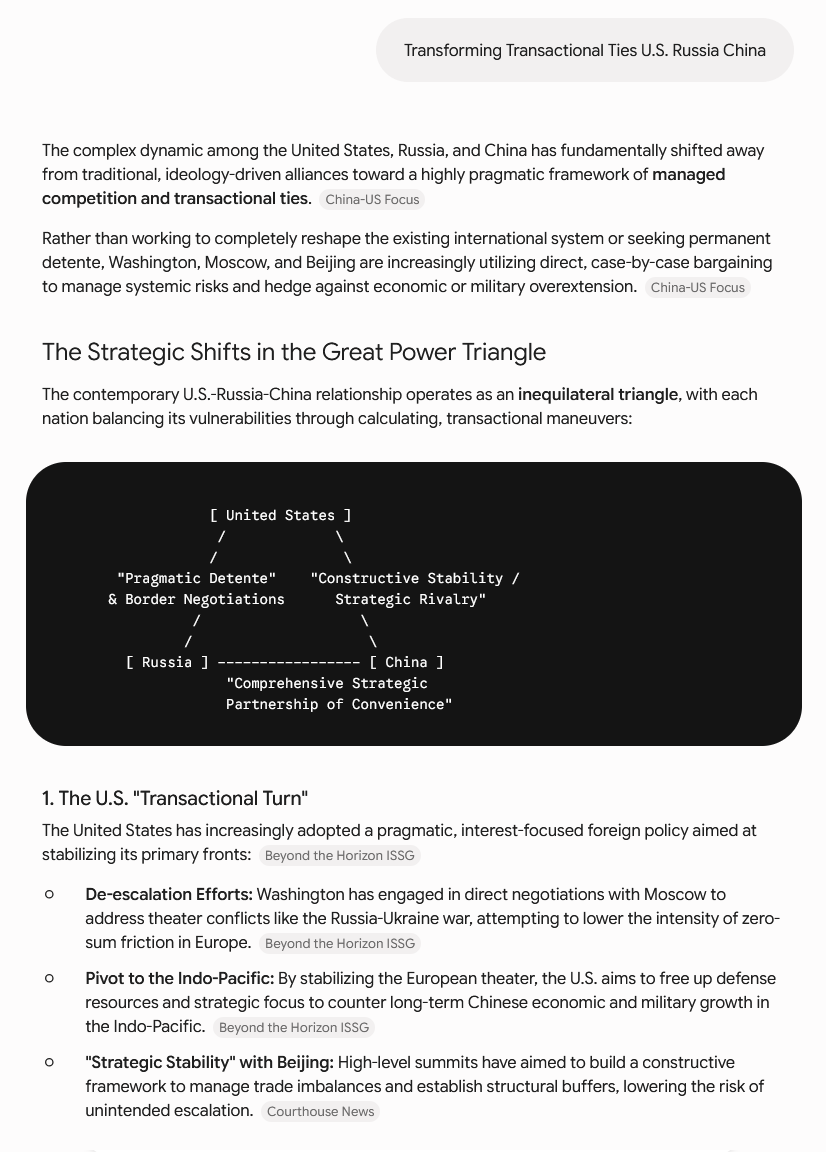
The Strategic Shifts in the Great Power Triangle The contemporary U.S.-Russia-China relationship operates as an inequilateral triangle, with each nation balancing its vulnerabilities through calculating, transactional maneuvers:
1. The U.S. "Transactional Turn" The United States has increasingly adopted a pragmatic, interest-focused foreign policy aimed at stabilizing its primary fronts:
De-escalation Efforts: Washington has engaged in direct negotiations with Moscow to address theater conflicts like the Russia-Ukraine war, attempting to lower the intensity of zero-sum friction in Europe.
Pivot to the Indo-Pacific: By stabilizing the European theater, the U.S. aims to free up defense resources and strategic focus to counter long-term Chinese economic and military growth in the Indo-Pacific.