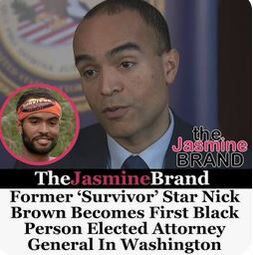
Washington's Attorney General, Conflicts of Interest, and the Question of Accountability
Should Washington Attorney General Nick Brown Be Held Accountable for His Handling of Initiative 638?
The Attorney General of Washington State holds one of the most important positions of public trust in our government. The office is not supposed to serve a political party, a personal agenda, or a particular ideological movement. Its responsibility is to represent the people of Washington and uphold the law, regardless of whether the Attorney General personally agrees with the laws being challenged. That is precisely why Attorney General Nick Brown's handling of Initiative 638 deserves serious public scrutiny. Washington voters approved Initiative 638 in the November 2026 election. The measure addresses transgender participation in girls' K-12 school sports. Following a lawsuit challenging the initiative, Brown announced that his office would appoint an outside law firm, Bryan Cave Leighton Paisner (BCLP), to defend the measure on behalf of the state. Brown explained that his office has spent considerable time defending transgender rights and that his personal views should not determine which laws receive legal defense. He presented the appointment of outside counsel as a way to address potential conflicts and ensure that the voter-approved initiative receives an appropriate defense. But that explanation raises another important question: If the Attorney General recognizes that his personal and professional history creates concerns about impartiality, why wasn't the potential conflict fully disclosed and addressed before this situation developed?
Recusing Yourself Is Only the First Step There is nothing inherently wrong with appointing outside counsel. State attorneys general routinely use outside law firms when specialized expertise, workload, or conflicts make it necessary. The problem is that appointing an outside law firm does not automatically eliminate every concern about impartiality. Brown's former law firm, Pacifica Law Group, is part of the legal team challenging Initiative 638. His office has also publicly advocated for transgender rights and opposed certain restrictions affecting transgender athletes. These facts do not automatically establish wrongdoing. However, they create legitimate questions about whether the state has taken sufficient steps to protect the appearance and reality of impartial legal representation. The public deserves to know whether Brown fully disclosed his professional relationships, what steps were taken to identify conflicts, and who ultimately controls the state's legal strategy. A recusal should mean more than stepping away from the courtroom while retaining influence over the outcome. cont...