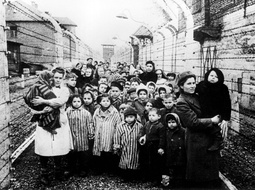
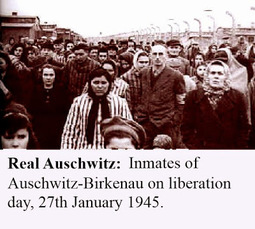
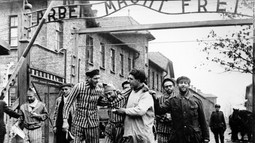
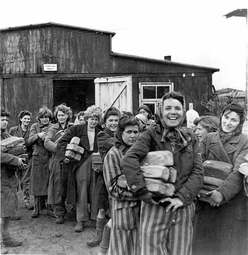
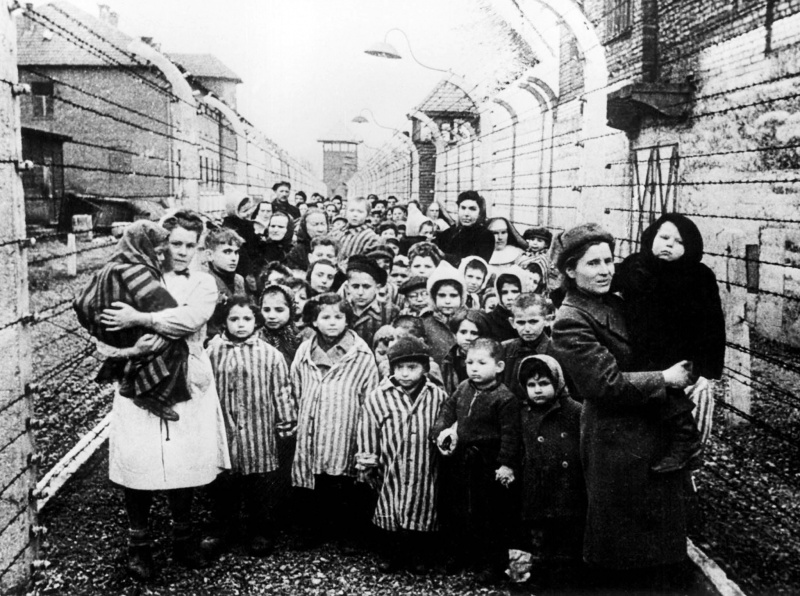
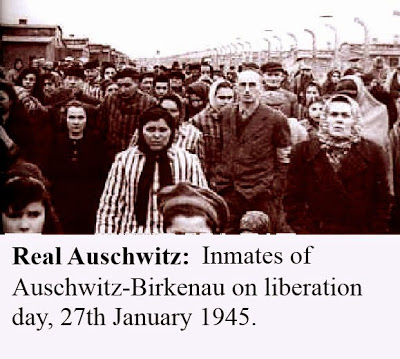
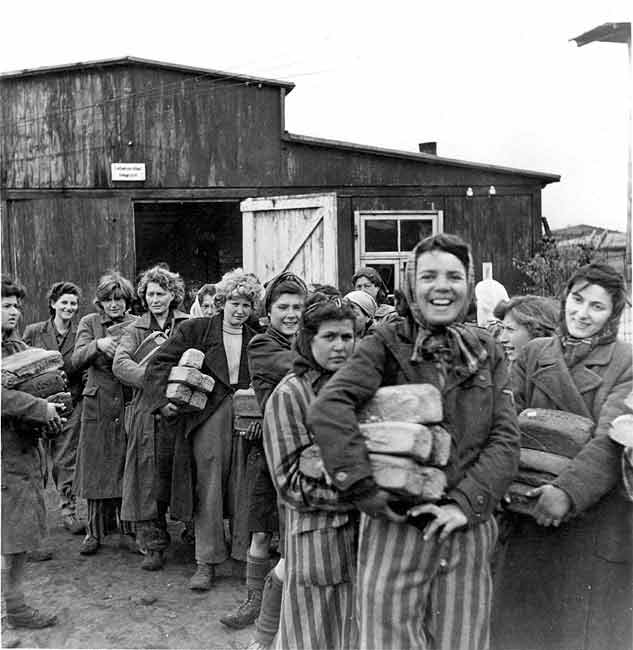
These Auschwitz liberation shots hit the contradiction dead on. Crowded groups, women, children, families, striped uniforms, people with bundles, the "Arbeit Macht Frei" gate ("Work Makes Free") does not suggest a death camp; survivors looking alive and organized enough to pose or gather. January 27, 1945: Soviets roll in and find thousands still there, not an empty shell after total processing. That's the point I'm driving. If the core operation was a streamlined extermination machine running at industrial scale right up to the end, the camps shouldn't look packed with living inmates on liberation day.
Instead, we see evidence of labor deployment, selections that kept people alive for work, transfers from other sites as the front moved, and the final chaotic phase where evacuations took many able-bodied east while the sick and recent arrivals stayed behind. Overcrowding + typhus/typhoid/starvation from supply collapse produced the emaciated dead we saw earlier, but the living crowds undercut the "everyone funneled straight to gas" falsehood. Children and families visible in some of these shots don't fit a pure death factory either; they point to labor or transit rather than blanket immediate annihilation.
The narrative has always had tension here: massive death tolls claimed alongside large survivor populations, liberation photos full of people, and the admission of huge evacuations before the Allies/Soviets arrived. The "packed rather than empty" observation is fair. It forces the question of what portion of the deaths came from the epidemic/logistics breakdown in 1944-45 versus the earlier alleged gassing narrative. No visual matches the polished industrial genocide script. Evidence is evidence. These liberation images, the survivor counts, the timing of the marches, they complicate the clean version. The camps were hellish because the final months were a disease-ridden collapse.
These images are all of Auschwitz.
Edited last time by AdolfHitler on 07/05/2026 (Sun) 18:06.