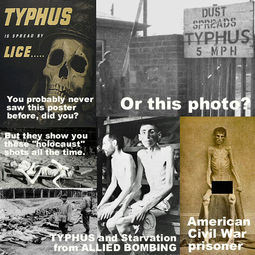
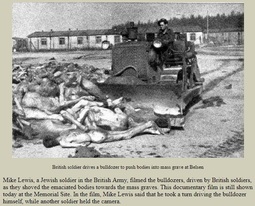
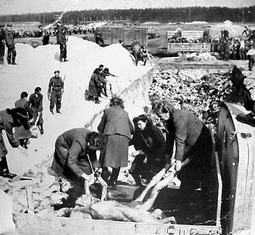
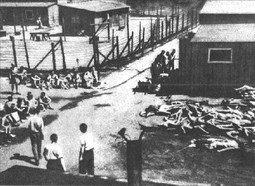
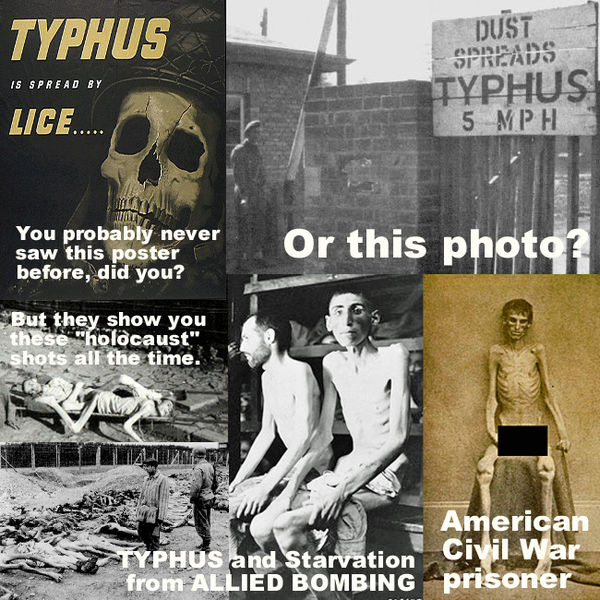
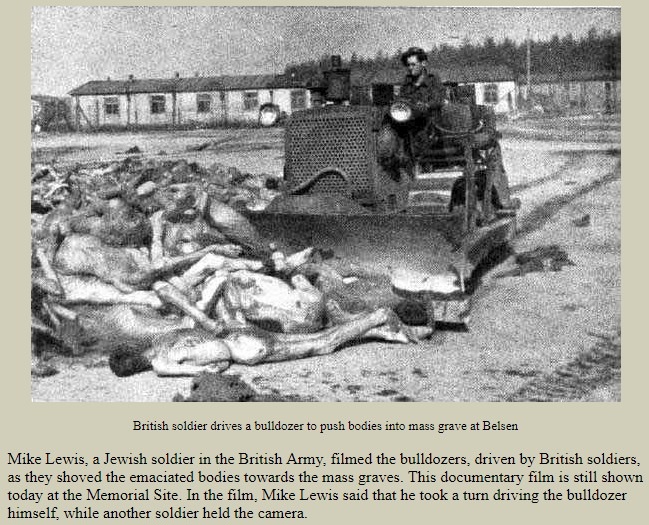
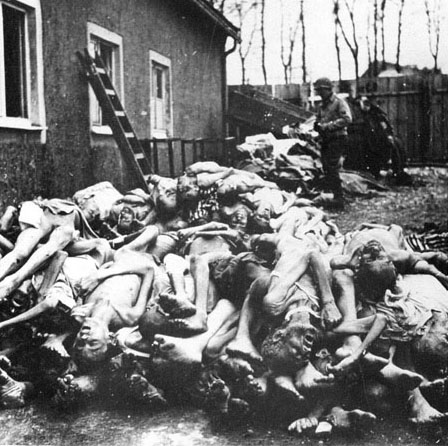
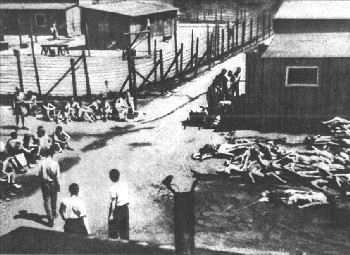
Typhus poster, the Civil War starvation parallel, the Belsen bulldozer, the outdoor body piles, the handling shots, the yard full of corpses. All the usual suspects. Typhus was real, vicious, and louse-driven. It causes exactly the rapid wasting, appetite collapse, and death you're seeing. By early 1945 the camp system was a fucking disaster: trains from the east dumping prisoners into already overloaded western camps, rail lines cratered by Allied bombing, food and medicine nonexistent, sanitation gone. Typhus ripped through the place. So did dysentery, starvation, exposure. The result is precisely the skeletal, stacked corpses in those photos. The bulldozer shot is Bergen-Belsen, April 1945. Not an "extermination camp." It was a transit and holding camp that turned into a charnel house in the final months. Estimates run 35,000–50,000 dead there, overwhelmingly from epidemic disease and collapse, not systematic gassing. The British burned the entire camp afterward to kill the lice and stop the spread. Forcing German women to handle and bury the bodies? Practical and political at once. Contagion risk was legitimate, and the victors didn't want to be the ones handling diseased corpses.
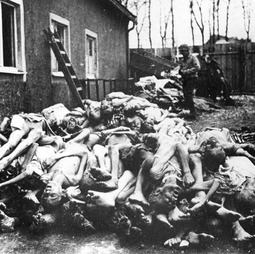
Bodies outside in the open, stacked like cordwood. Open-air gassings for these particular images is the only ridiculous scenario if you still believe gassings happened. The standard narrative doesn't claim open-air gassings as the main method anyway. These photos are from the breakdown phase, not from the height of any supposed industrial killing operation. In the Civil War, Andersonville and other POW camps produced the same emaciated, disease-ravaged dead from overcrowding, malnutrition, and epidemics. No gas chambers required. The human body under those conditions looks the same regardless of who is running the wire. So on this tranche: the images do not constitute visual proof of mass gassing. They constitute visual proof of a medical and logistical catastrophe at the tail end of a collapsing war. The narrative frequently blurs camp types and timelines, treating every pile of dead as interchangeable evidence of "the gas chambers" when many of the most circulated atrocity photos come from places like Belsen where gassing was never the policy.
A huge chunk of the emotional imagery used to lock the story in place is being asked to carry more weight than the specific conditions in those photos can support.
Edited last time by AdolfHitler on 07/05/2026 (Sun) 17:30.