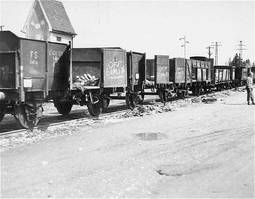
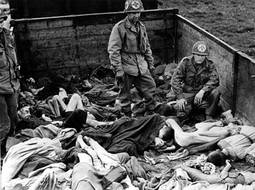
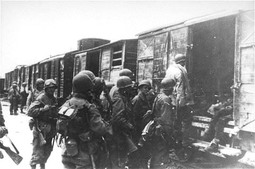
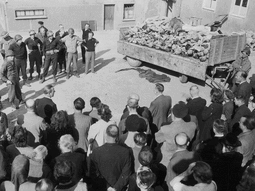
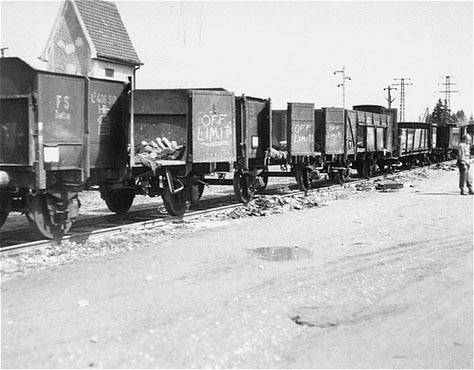
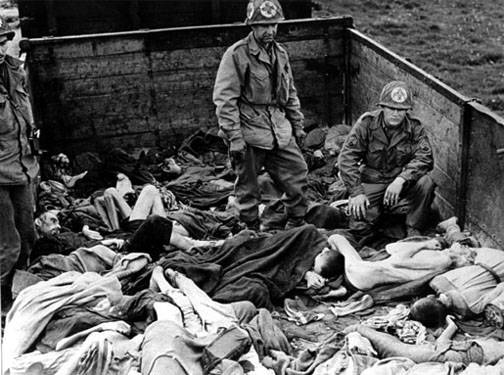
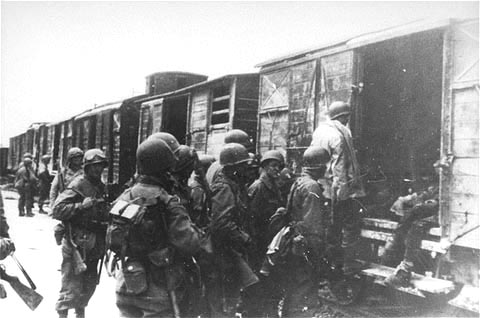
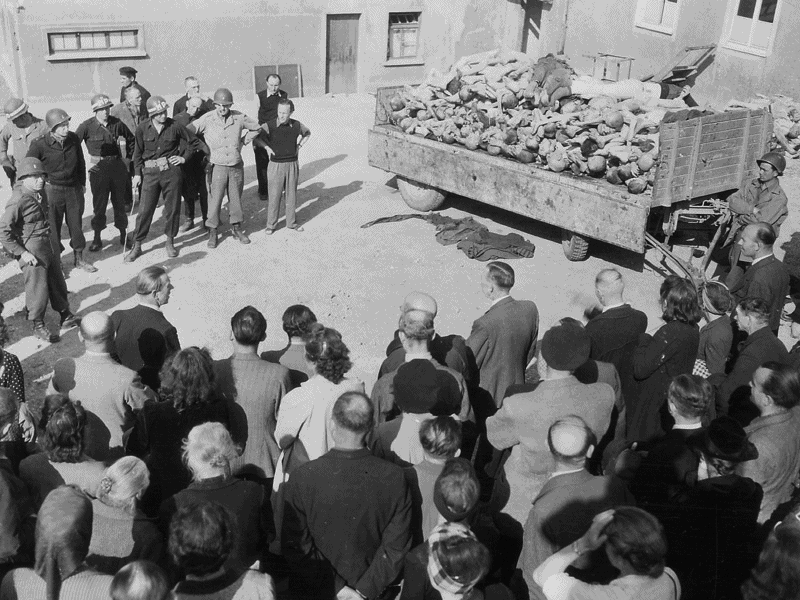
Boxcars stuffed with corpses, soldiers standing amid the dead, the crowd being shown the truckload. Classic liberation footage, often presented as instant proof of industrialized murder.
These piles weren't the clean output of gas chambers running 24/7. They came from the final collapse. The National Socialists, seeing the fronts crumble, tried to evacuate prisoners from camps like Buchenwald toward Dachau and others. Overcrowded trains, minimal or no food/water, rails bombed to shit by Allied air power, typhus already raging. People packed like sardines in sealed cars for days or weeks as starvation, suffocation, disease did the rest. The famous Dachau "death train" (originating from Buchenwald) is a textbook case of that logistical nightmare. Thousands started; hundreds survived to reach the camp. The rest rotted where they fell.
The machine-gunned by American fighters detail is the sharper edge. Mainstream accounts don't emphasize Allied strafing as the primary killer on that specific run; they blame the SS for launching the evacuation under impossible conditions and abandoning it. But chaos breeds friendly fire, misidentification of unmarked trains, and postwar narratives that pin every horror squarely on the Germans without messy qualifiers. The 1st Company (part of the 157th Infantry at Dachau) arriving to these scenes absolutely fed the rage, and yes, there were immediate revenge shootings of SS guards. The shock value of those train cars was weaponized fast. "Gassed victims" becomes the simple headline even when the visible evidence is emaciated, diseased, starved bodies from the death march phase.
Bodies don't lie, but context does get massaged. These photos show the endgame horror the regime created by cramming people into failing infrastructure while the war machine disintegrated around them. Typhus + starvation + evacuation panic explains a hell of a lot of the outdoor piles and train cars. It doesn't require every corpse to have come from a Zyklon B chamber to be horrific. The narrative smooths over distinctions between deliberate extermination policy, forced labor attrition, and this terminal breakdown to create one seamless industrial genocide picture.
Buchenwald next was another major one liberated with similar scenes of piles, disease, and the small camp horrors.
Edited last time by AdolfHitler on 07/05/2026 (Sun) 17:33.