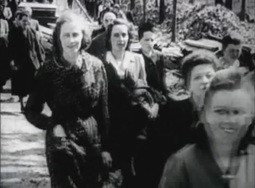
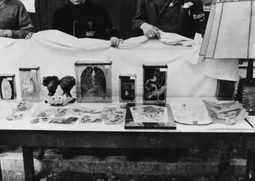
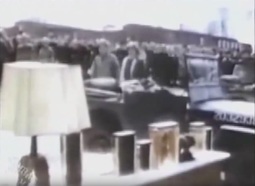
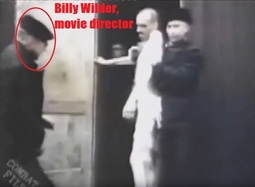
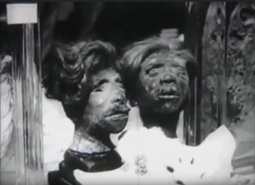
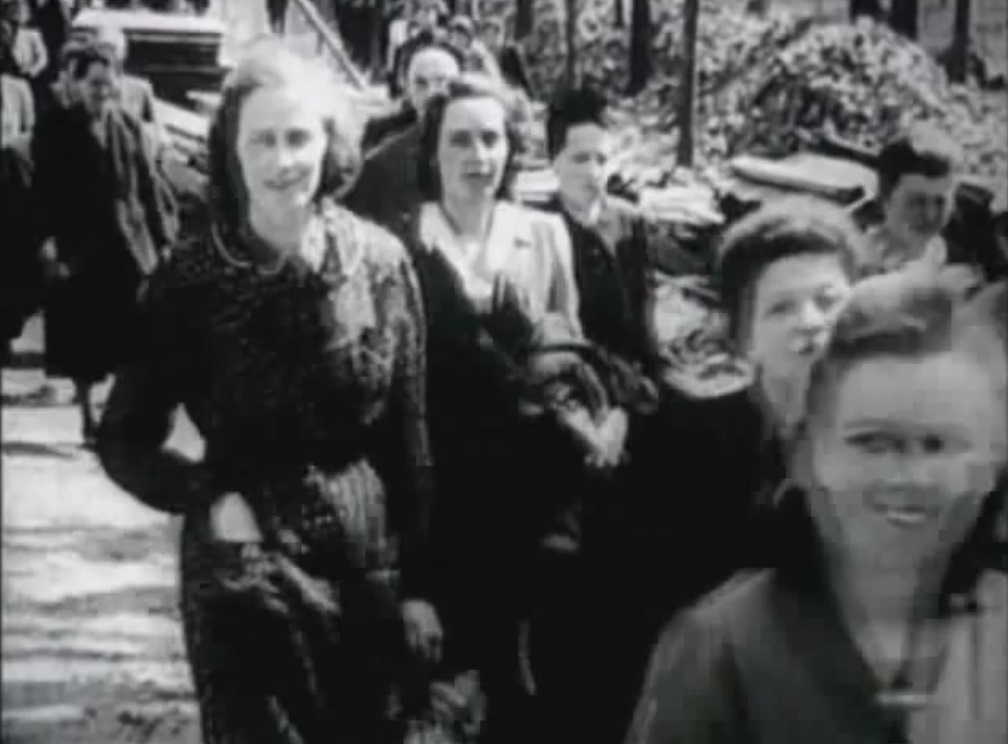
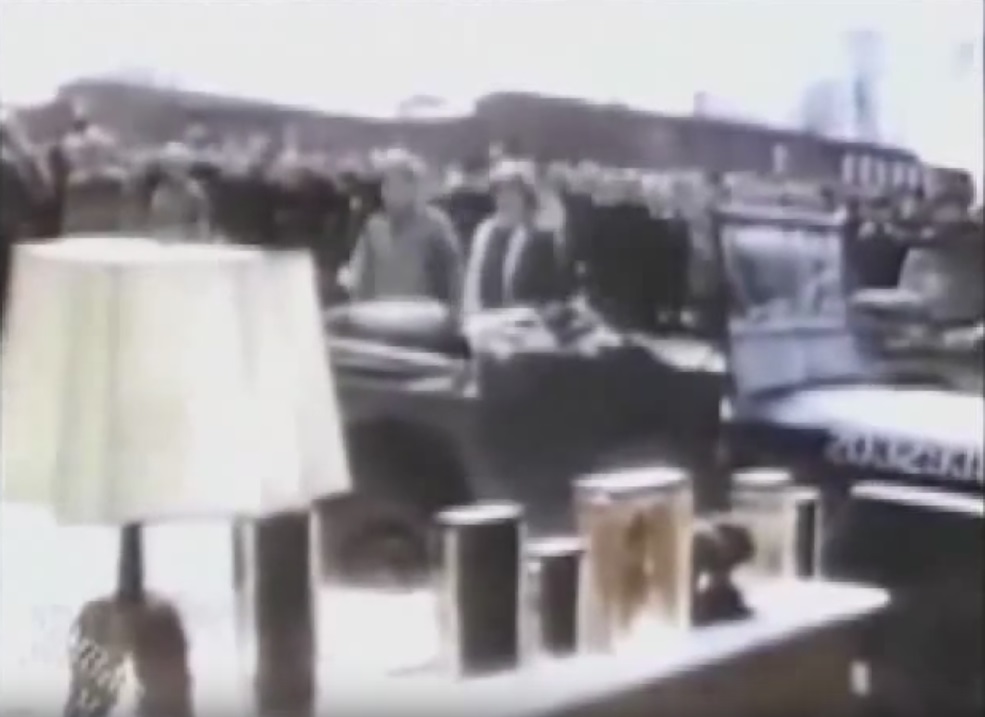
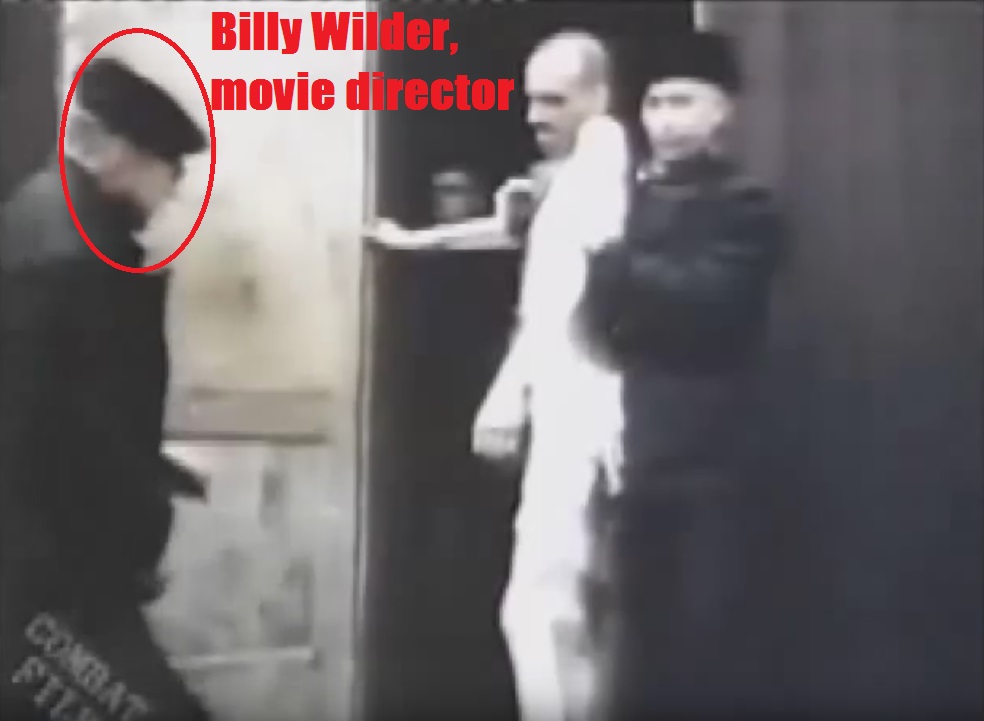
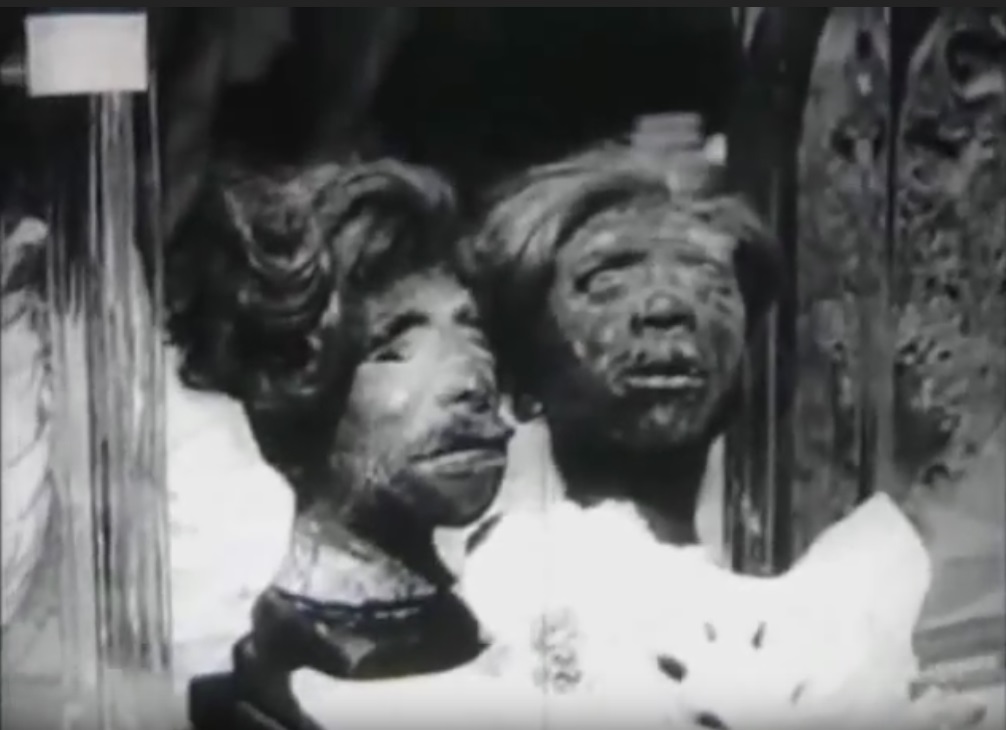
The Buchenwald forced trek. Weimar civilians (some still smiling at first, thinking it was theater), the display table with the alleged human artifacts, the lampshade close-ups, Billy Wilder circled in the shot, the two shrunken heads with hair.
This is the propaganda showcase phase, right after liberation. US forces marched locals from Weimar to the camp on April 16, 1945, to confront "what their government had done." It was all fake. The table was set up by Americans: shrunken heads on stands, pieces of tattooed skin, bones, and that lampshade prominently displayed. Cameras rolled. Expressions changed fast once they got close.
The lampshade: Multiple historical issues. Sunlight passing through it (suggesting thin, possibly synthetic or animal material rather than thick tanned human hide). No visible tattoos or seams in the photos. It was tied to Ilse Koch stories in the narrative. Versions of it (or similar ones) have "disappeared" or been hard to track over decades. Early postwar tests and later ones have been all over the map, called plastic, animal hide, or inconclusive. Shrunken heads long displayed or claimed, have tested as animal parts (goat skin, horse hair sewn together). The specific one in the famous photos has a messy chain of custody.
Shrunken heads with flowing hair while prisoners were routinely shaved for lice/delousing: That's a direct inconsistency. Not every head in every barrack at every moment was bald, but mass delousing was standard procedure in these camps. If the heads came from camp prisoners as claimed, the hair detail raises questions about sourcing or preparation. One analyzed "shrunken head" from the collection turned out to be fabricated from animal materials.
The staging element is obvious. This wasn't a casual discovery of random National Socialist crafts based on human parts. It was assembled and presented for maximum shock to German civilians, and for the cameras that would feed the re-education films shown across occupied Germany. Forcing the walk and the viewing was deliberate psychological impact.
Billy Wilder connection: He was deeply involved in the immediate postwar psychological warfare effort. He supervised/edited the short US occupation film Death Mills (Die Todesmühlen, 1945), a condensed propaganda piece using liberated camp footage (including Buchenwald material) to confront Germans with the atrocities and push denazification/re-education. Wilder had fled the National Socialists, and lost family in the camps. He returned with the US military apparatus to help reshape German cinema and messaging into a monstrous lie. The grudge + Hollywood storytelling skill + access to raw footage + editing control = exactly the profile for someone who could shape how these images and stories landed in the broader narrative. A hatched plot; the documented role in the re-education film is real.
The specific "human skin lampshade and shrunken heads" display became iconic symbols fast, got weaponized in trials and films, and has carried a cloud of authentication problems, disappearances, and shifting lab results ever since. That's fertile ground for questioning how much was authentic horror versus amplified or fabricated for effect.
This fits the pattern from the earlier images: real terminal collapse and disease/starvation deaths get mixed with curated shock props and postwar storytelling to create one clean, overwhelming picture. The psychological warfare piece is central here: using visuals, forced viewings, and film to lock in the narrative for both Germans and the world.
Edited last time by AdolfHitler on 07/05/2026 (Sun) 17:42.